Monograph: Louise O’Gorman
This project explores the book as a site of contemporary art discourse through the design of a monographic publication centered on Louise O’Gorman. The design seeks to mirror the fragmentary, contemplative quality of her photography by intentionally slowing the reader’s pace and creating a quiet space to focus on the work. Emphasizing stillness, transition, subtle movement, breathing room, light, and fragility, the project balances editorial structure, typography, and material choices to produce a visually engaging and persuasive object. Thoughtful sequencing, typographic restraint, and intentional spatial decisions guide the reader’s experience, resulting in a proposal that treats the book not only as a container for images and text, but as an active, tactile environment that echoes the artist’s themes and invites reflective exchange.
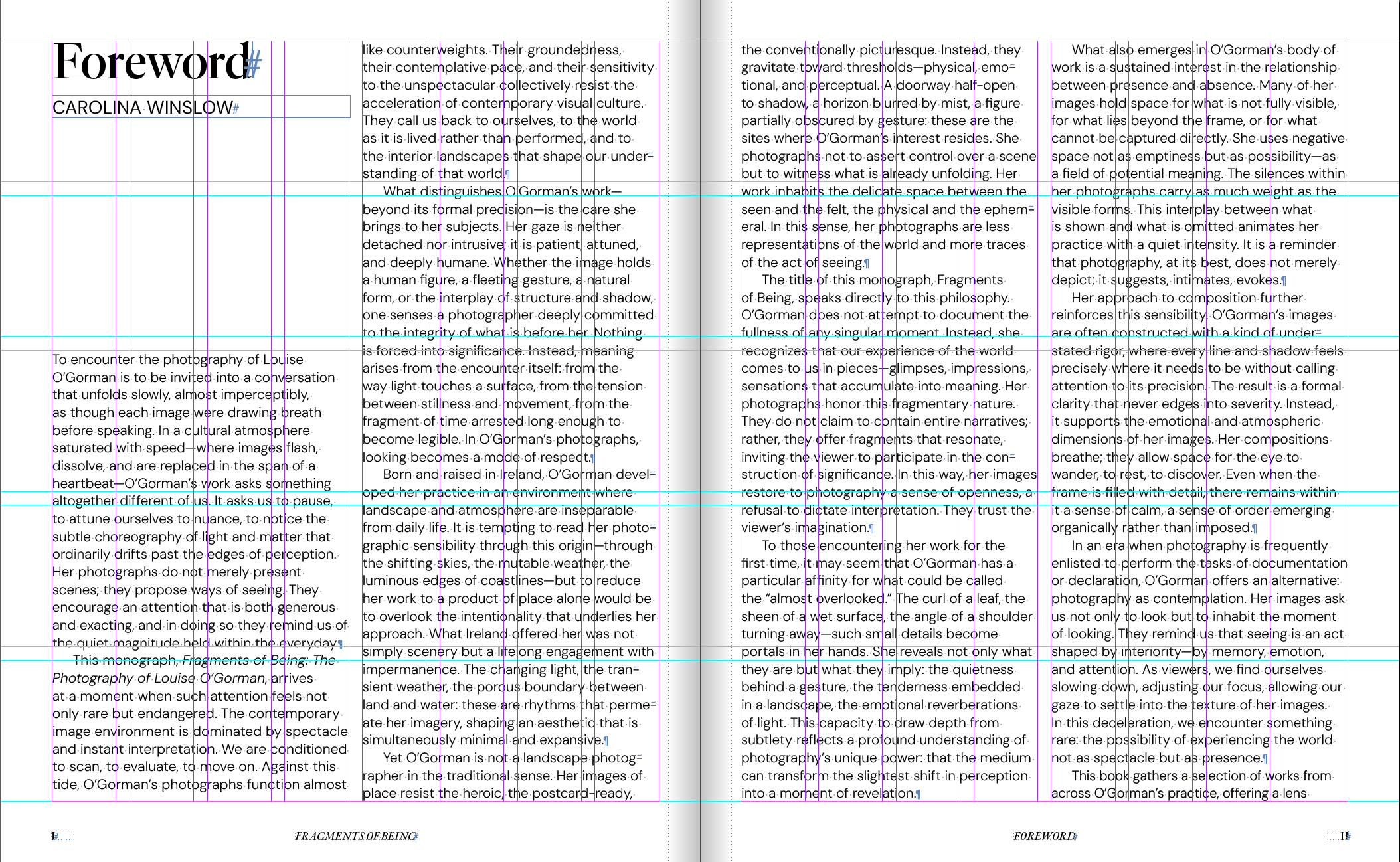
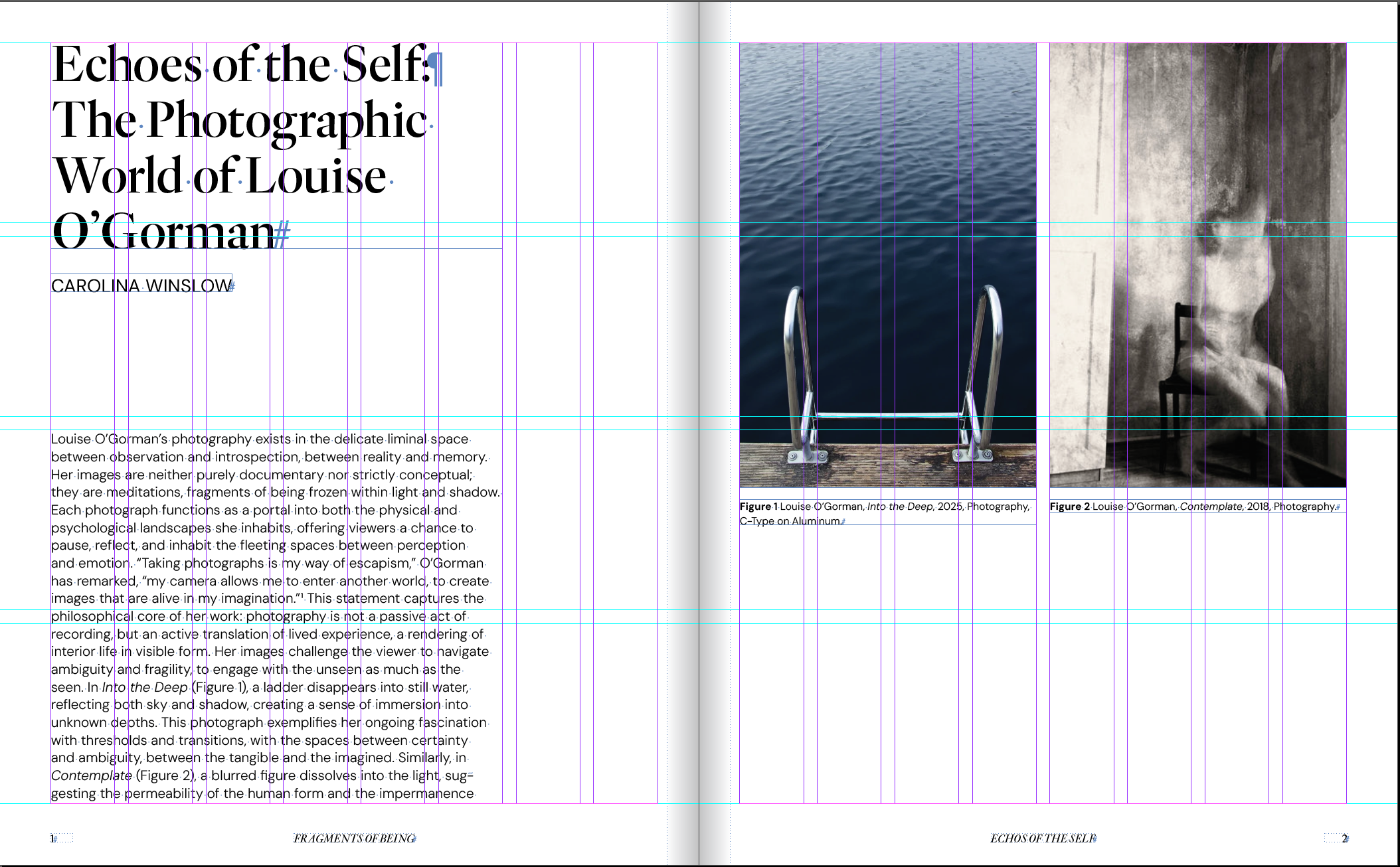
The publication is built on a flexible eight-column grid system designed to support both narrative text and image-driven content. A combination of one-column and two-column layouts allows for variation while maintaining consistency across sections. Margins and spacing were considered to enhance readability while reinforcing the book’s overall sense of openness and visual calm. Structural elements such as running footers, folios, captions, and endnotes are integrated seamlessly to maintain clarity.
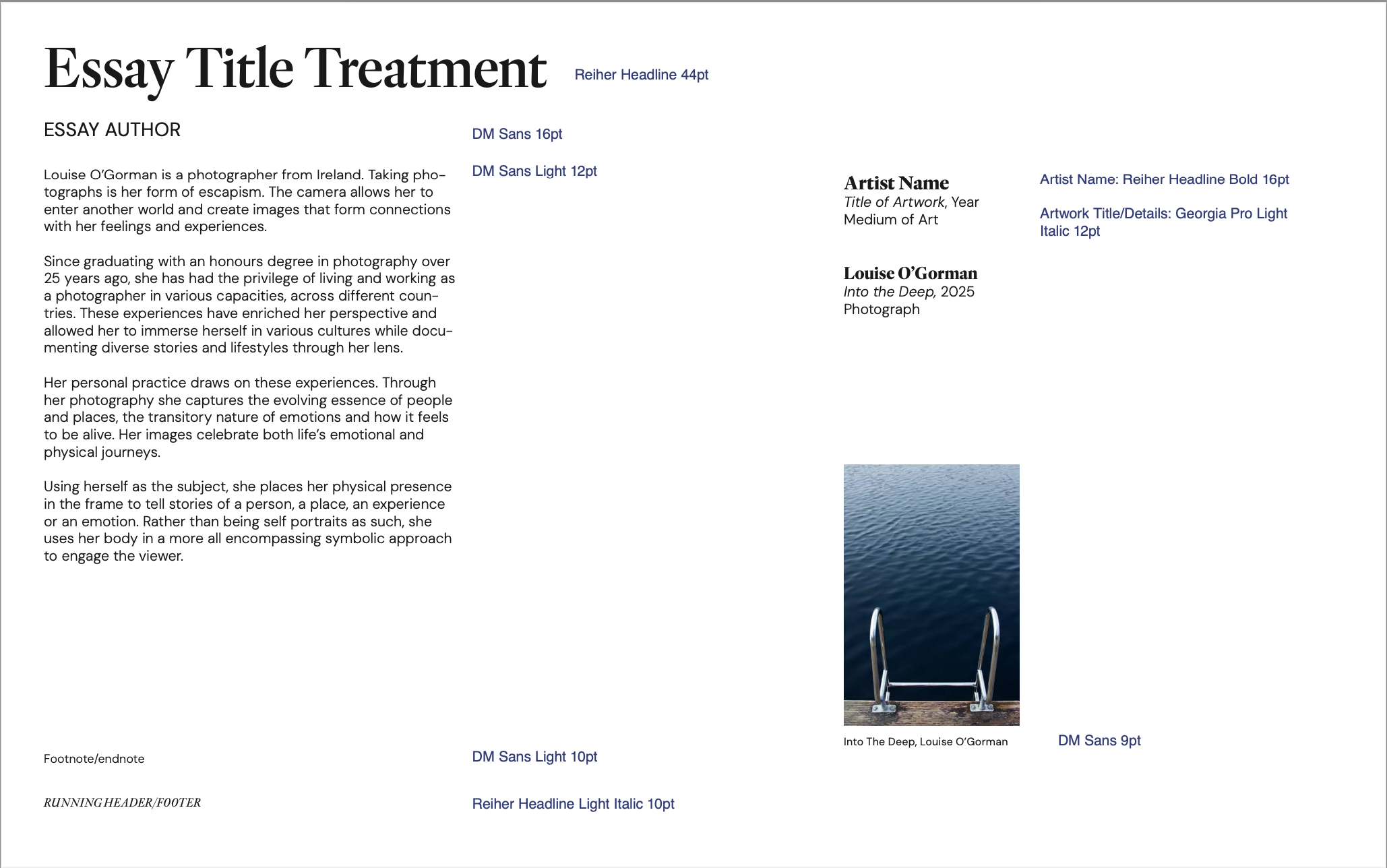
The typographic system pairs Reiher Headline with DM Sans to create a balance between expressive character and functional clarity. Reiher Headline is used for titles, section markers, and artwork labels, providing a subtle sense of presence without overwhelming the imagery. DM Sans supports body text, captions, and supplementary information, ensuring readability. Hierarchy is established through scale, spacing, and weight rather than decorative styling, reinforcing the project’s emphasis on quiet visual communication.
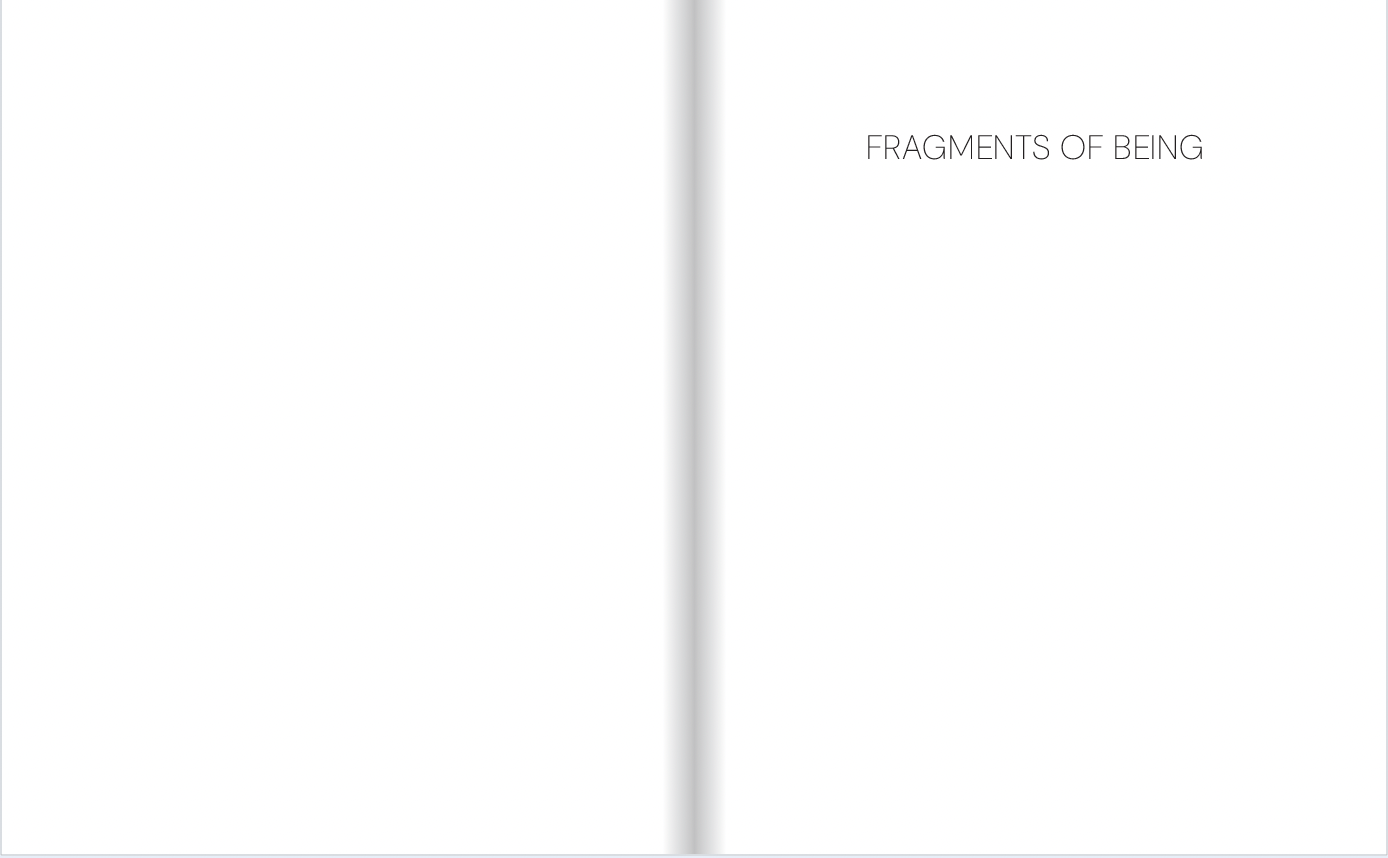
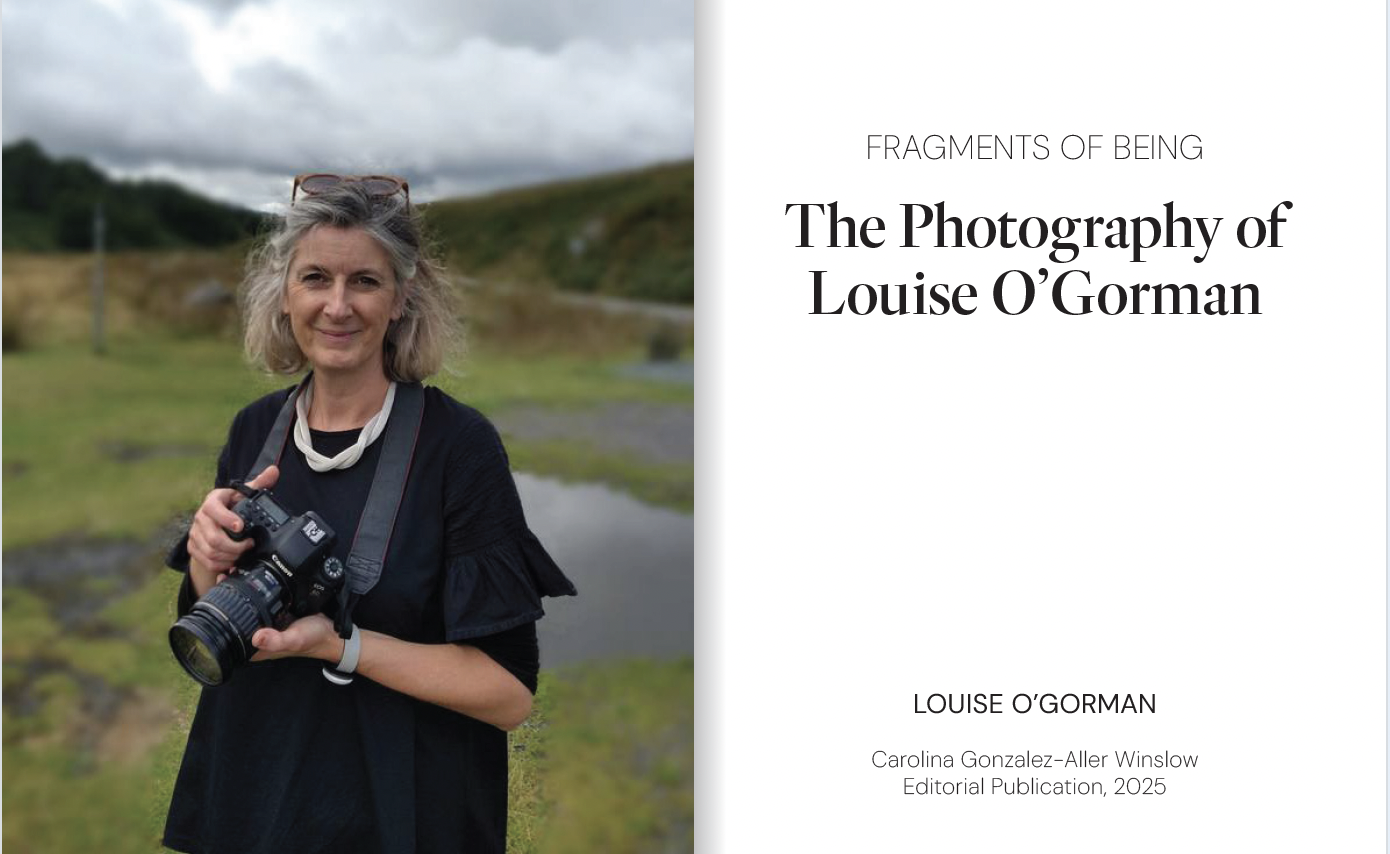
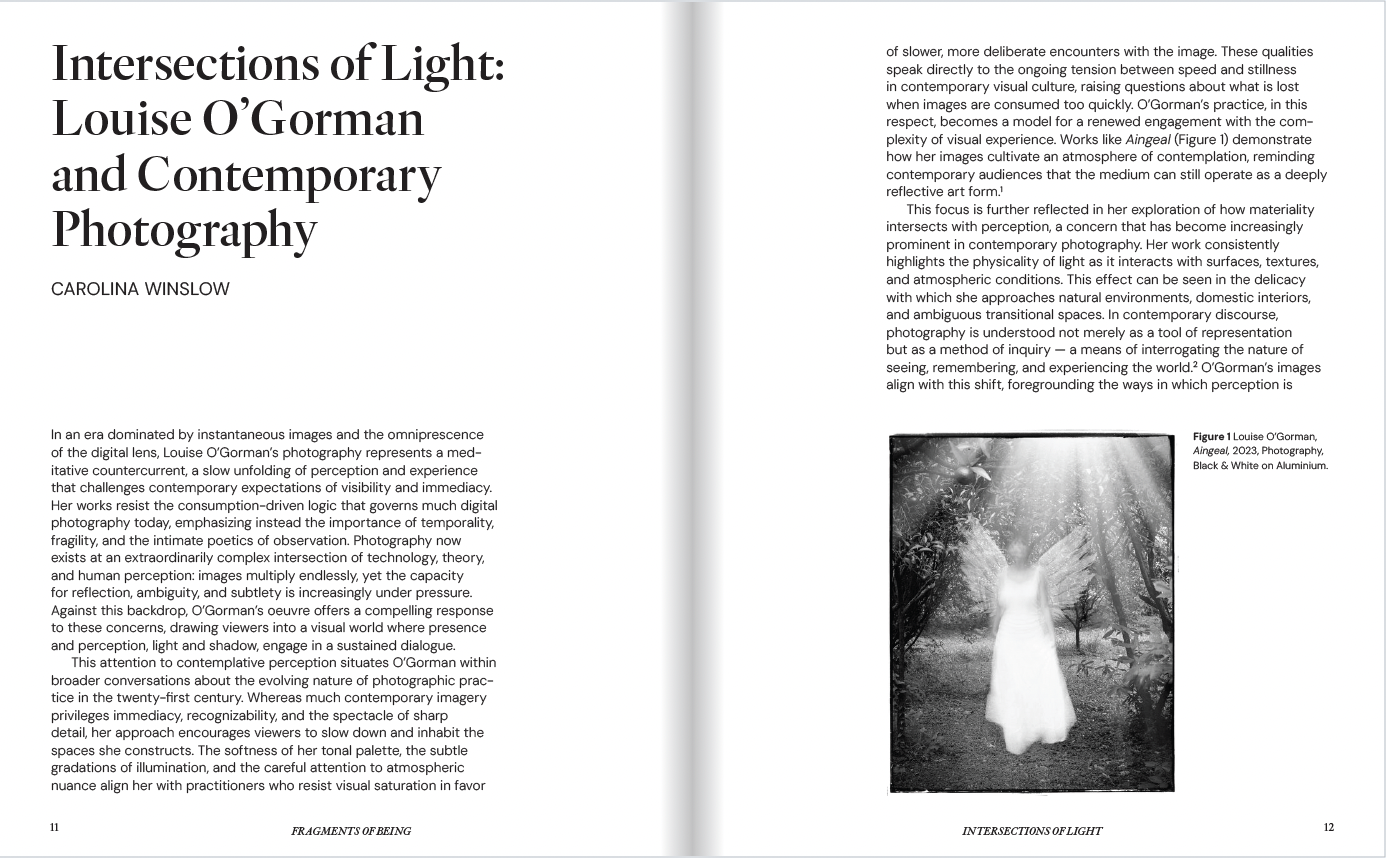
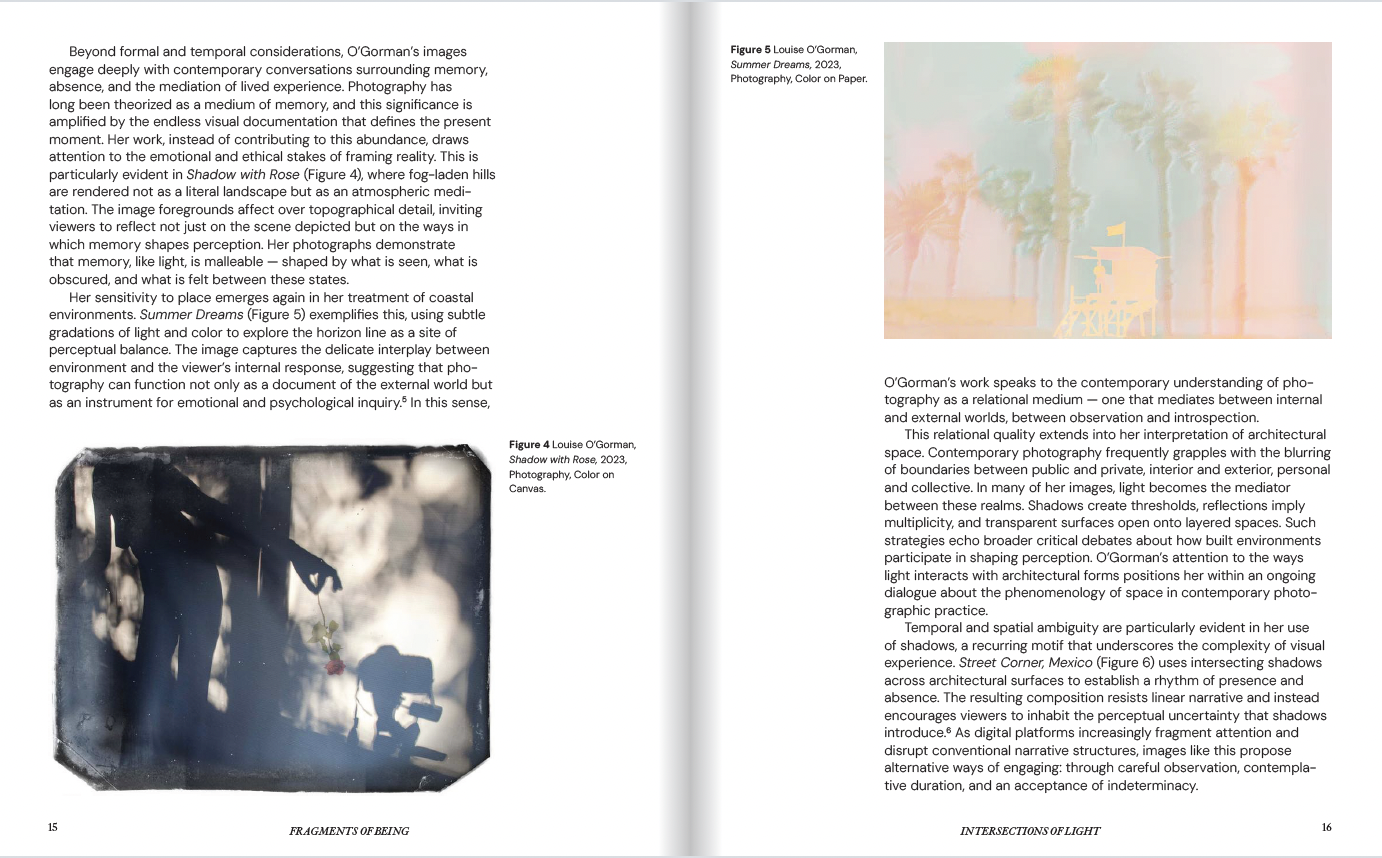
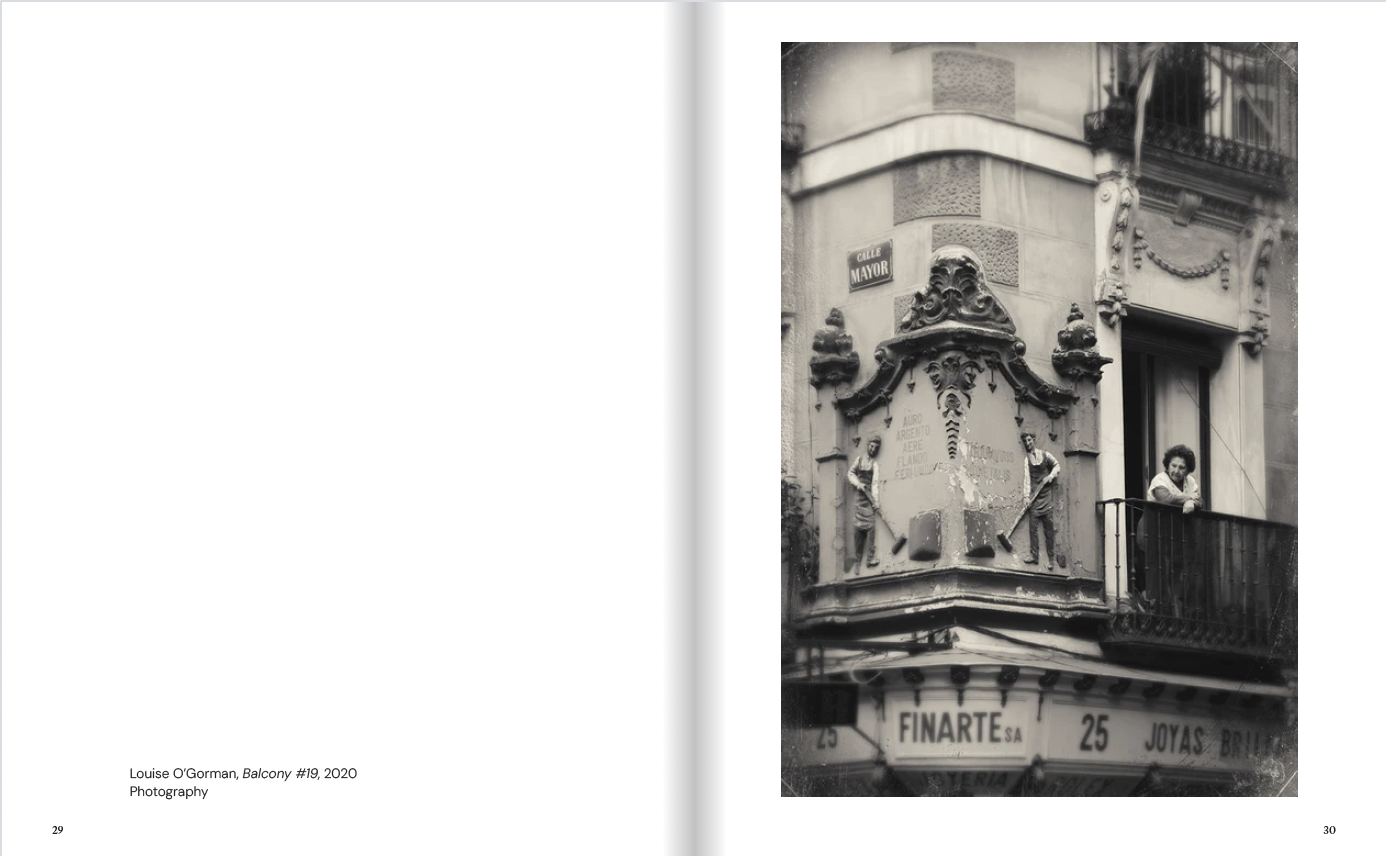
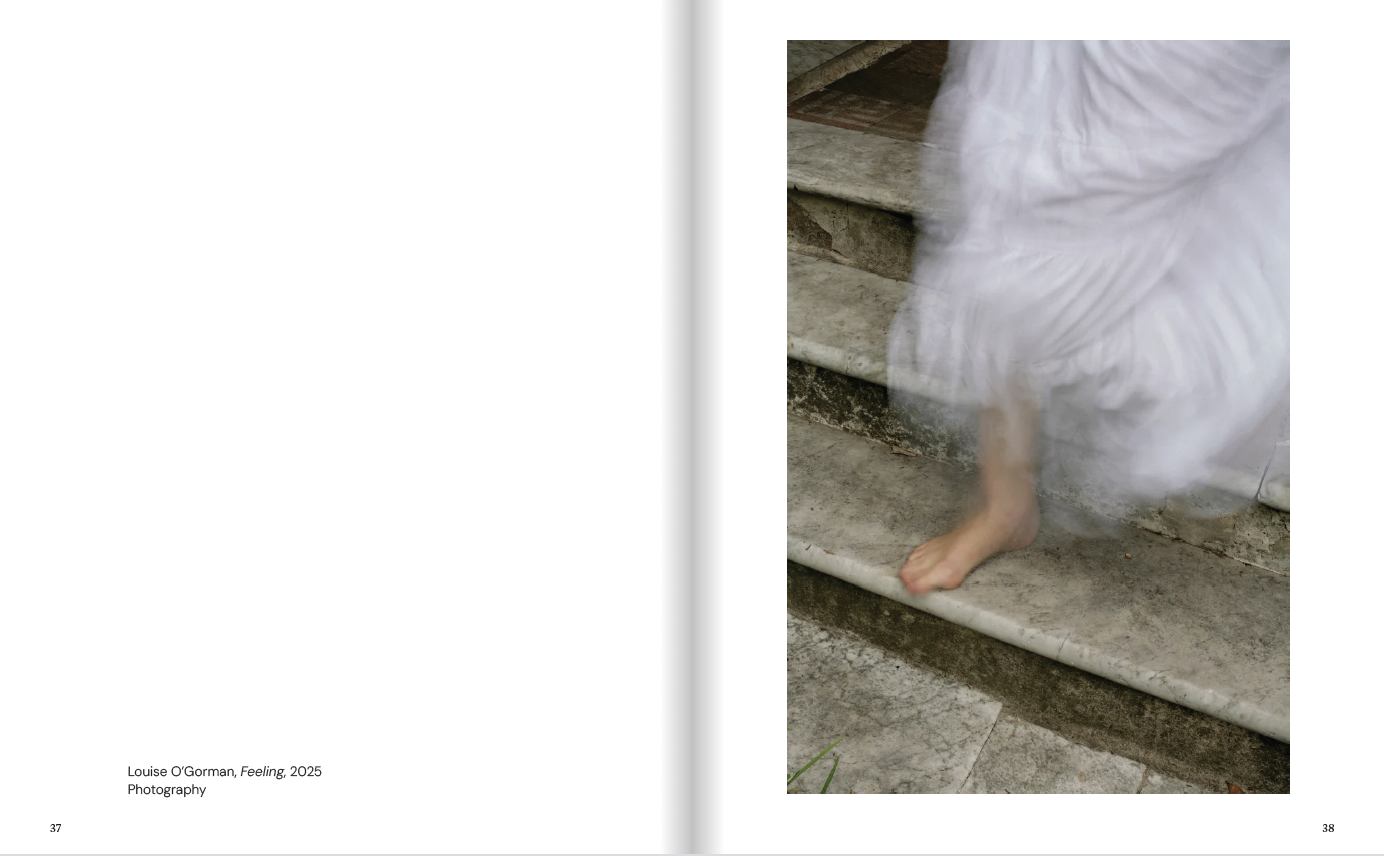
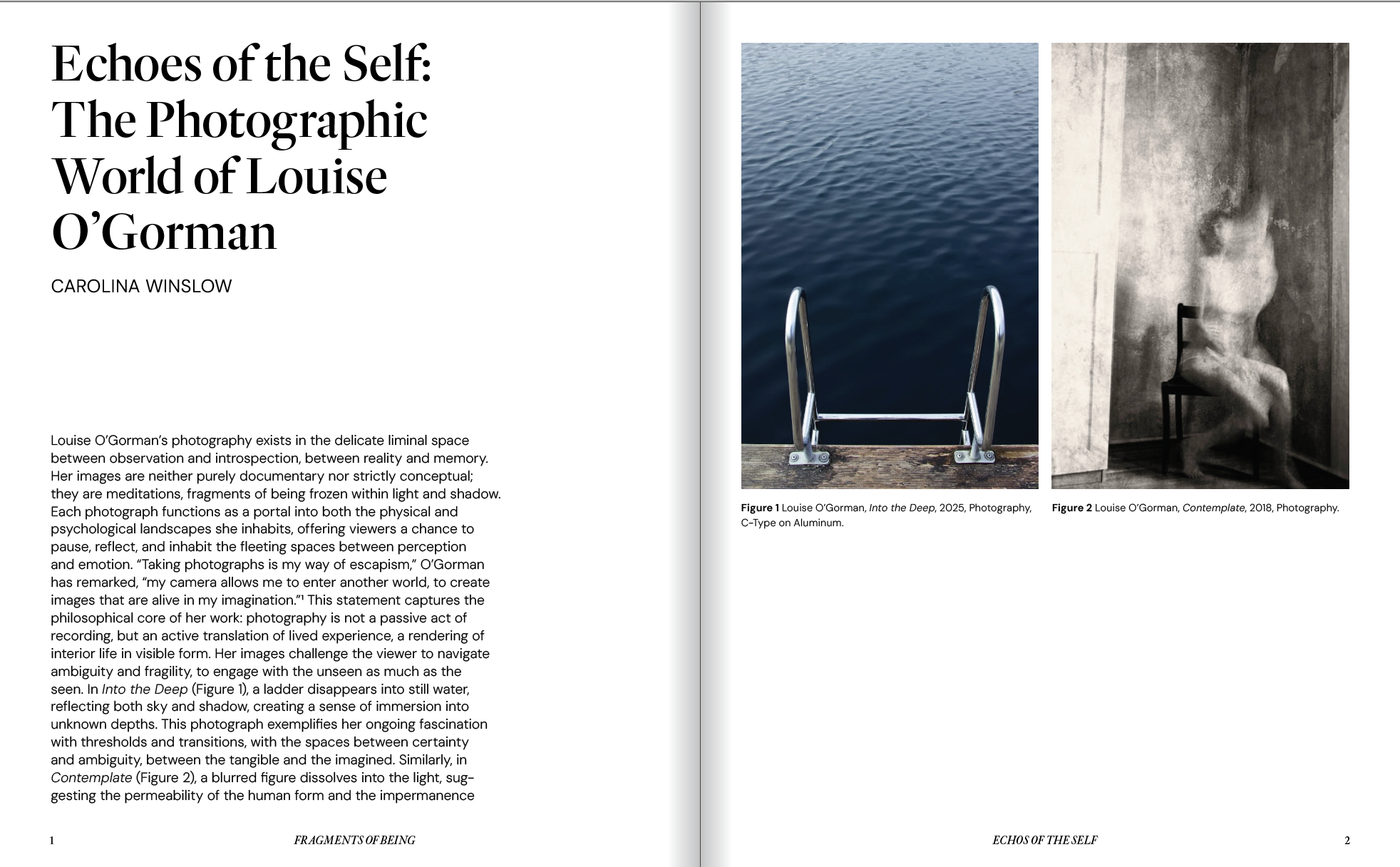
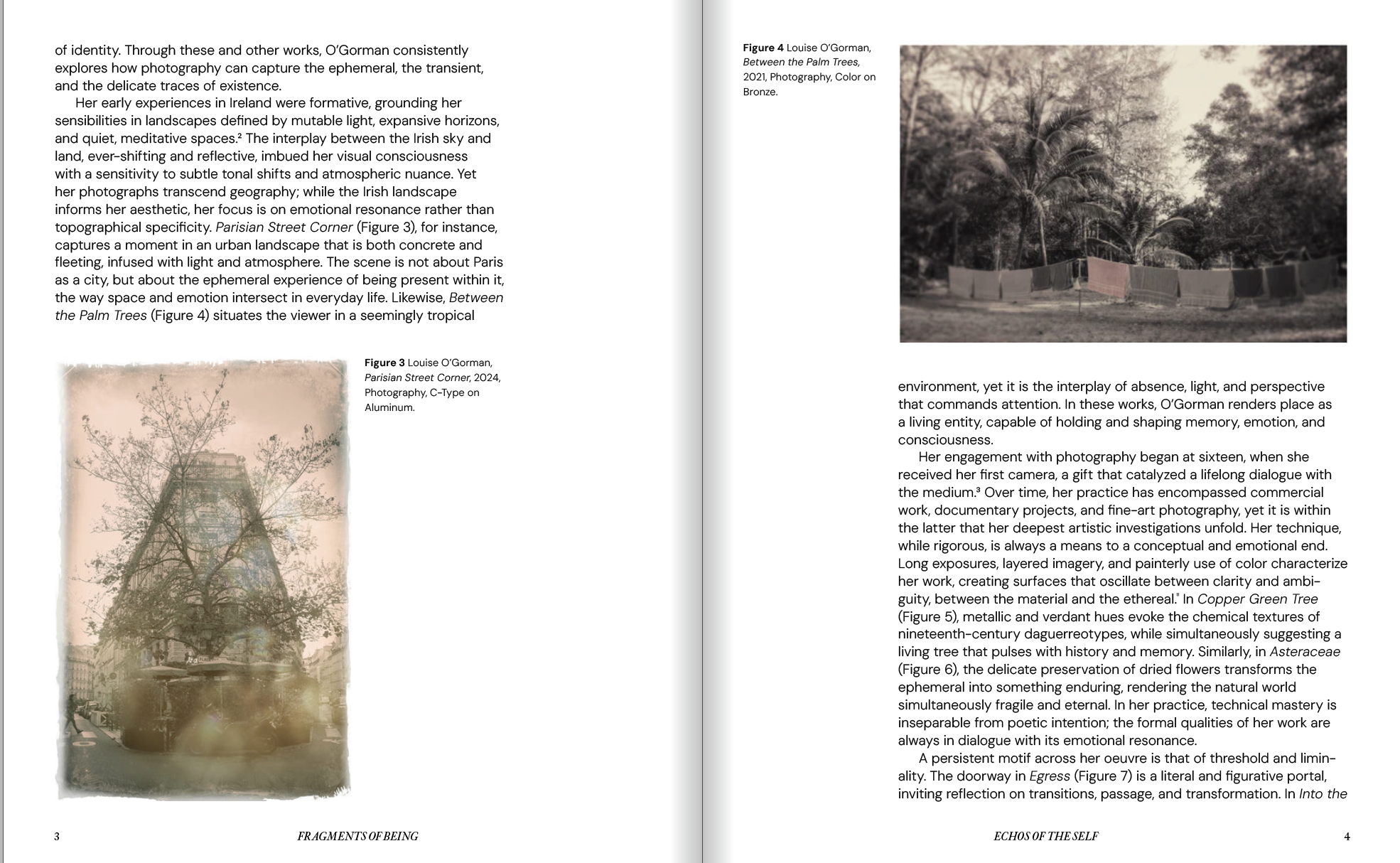
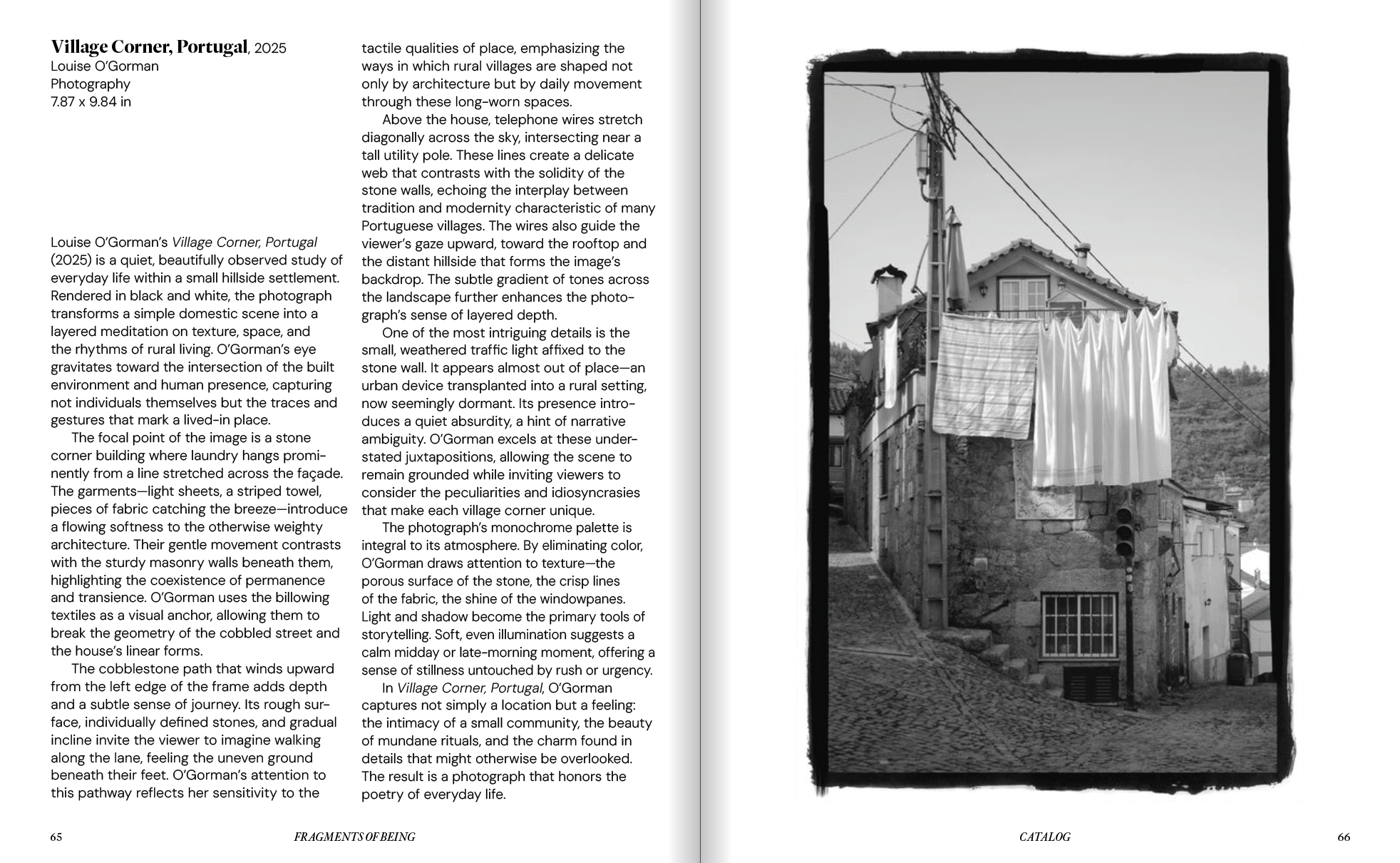
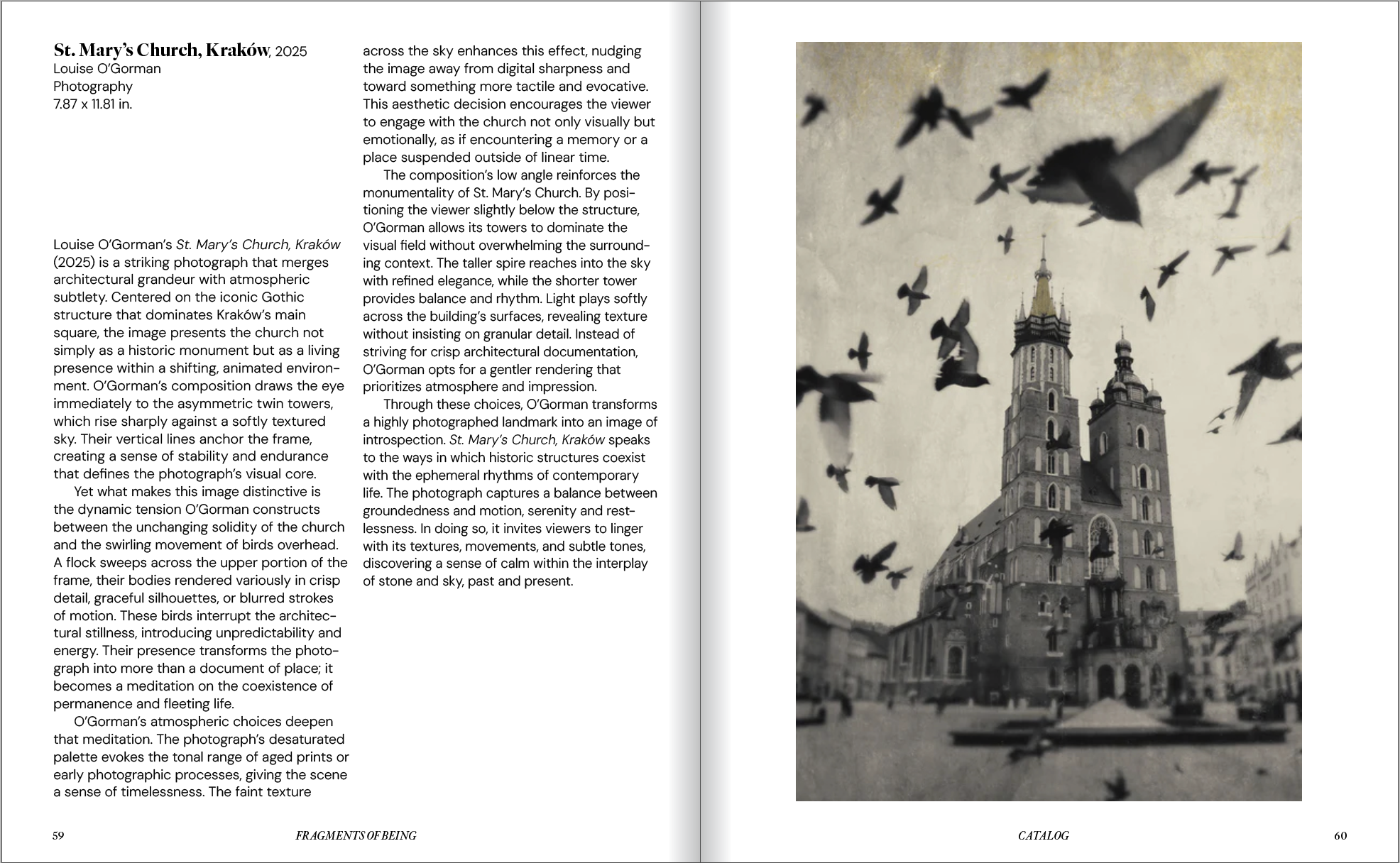
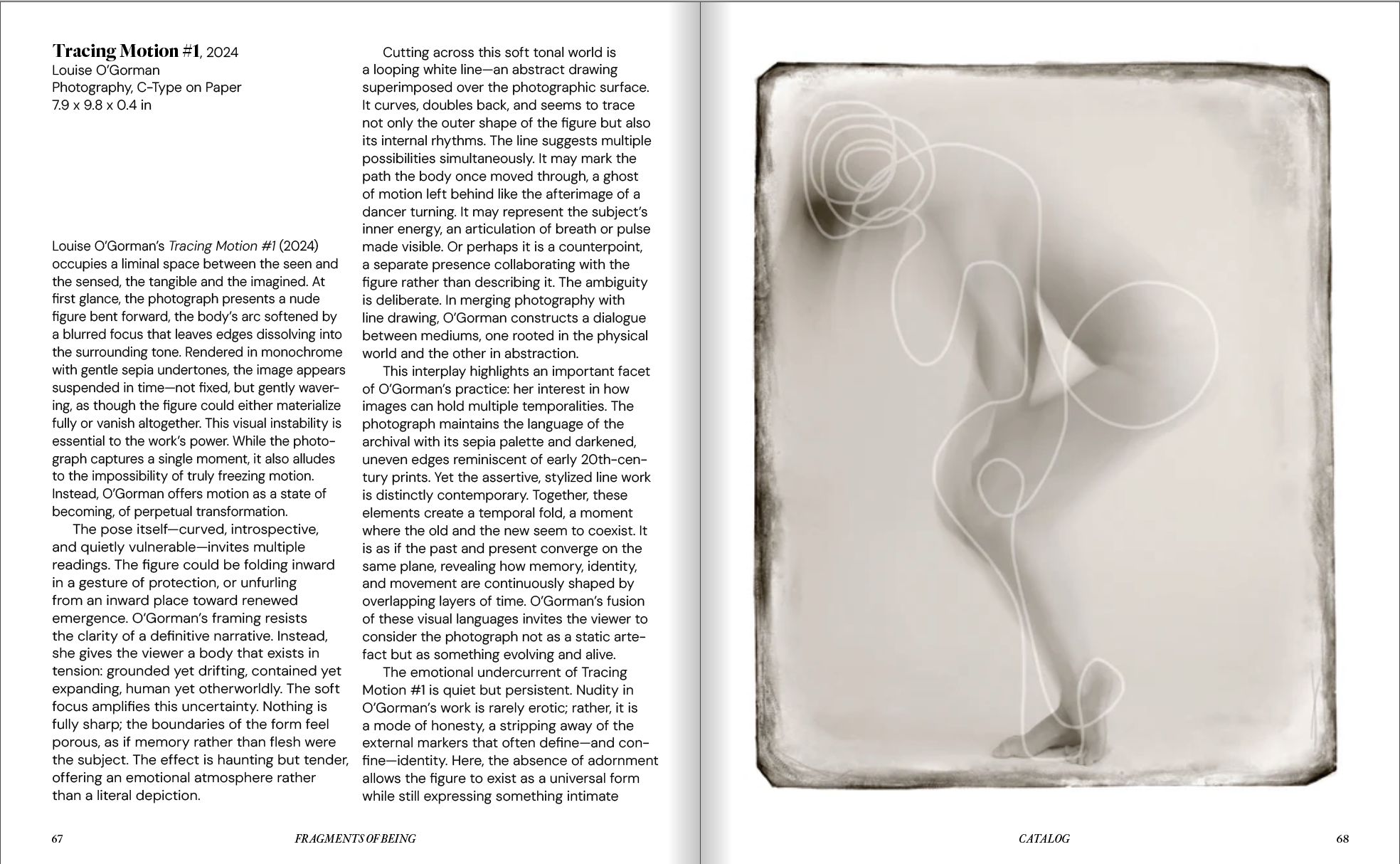
This publication moves through essays, image plates, and catalog entries in a carefully paced sequence that guides the reader between reflection and visual immersion. Its innovation lies in its restraint: design decisions intentionally recede to allow full absorption into the artist’s atmosphere. Image placement prioritizes spatial balance and quiet transitions, while text layouts maintain clarity without disrupting the flow. Through subtle spatial pacing, thoughtful composition, and seamless integration of structural elements, the book establishes a formal quietness that encourages slow viewing. Rather than imposing a rigid grid or dominant stylistic voice, the design reflects Louise O’Gorman’s way of seeing, emphasizing atmosphere, understated transitions, and a gentle rhythm that supports contemplation and uninterrupted engagement with the artwork.
